Freya Oracle Tarot channel logo

Freya Oracle Tarot Tarot Reader Review

Reader Profile & Integrity Audit

Freya Oracle Tarot channel logo

Freya Oracle Tarot Tarot Reader Review

Reader Profile & Integrity Audit

INTEGRITY SCOREBOARD

CURRENT GRADE

F

Problematic Reader

INTEGRITY SCORE

24

🔴 High Risk (Max 100)

MIRROR SCORE

2.73

Agency Index (Max 10)

These scores reflect an evaluative opinion based on the Lighthouse Standard analysis of this tarot reader’s public YouTube videos. Read our full methodology.

BEHAVIORAL PATTERN ANALYSIS

A concise look at the recurring messaging patterns shaping Freya Oracle Tarot’s content, emotional hooks, and dependency mechanisms.

Pattern Breakdown

This reader’s content pattern is built around:

  • Delivering highly specific, baseless promises of wealth and romantic fulfillment, which replaces viewer agency with passive waiting and conditions them to expect external rescues.
  • Fabricating ungrounded, hyper-specific details about future events, which bypasses critical thinking and fosters a deep emotional attachment to fantasy outcomes.
  • Framing the reading as a fated, algorithmic intervention, which artificially inflates retention and hooks the viewer into a cycle of hope addiction rather than real-world action.

Dominant Behavioral Profile: Fantasy Supplier, Comfort Prophet, Algorithm Chaser, Pseudo-Spiritual Physician

Reader RISK ASSESSMENT

A consumer-protection snapshot of how Freya Oracle Tarot’s tactics may affect viewer agency, decision-making, and emotional vulnerability.

Consumer Advisory: High Risk Profile

This reader relies heavily on manipulative tactics designed to manufacture dependency and exploit emotional vulnerability. The patterns identified below present a high risk to viewers by stripping away personal agency and replacing it with false promises. Use this guide to recognize these traps and protect your decision-making power.

Key Tactical Risks Found

Risk Category Findings Viewer Impact 🛑 When You See This
Guaranteed Predictions (26) The reader constantly promises massive financial wealth, sudden life changes, and specific romantic arrivals within exact timeframes (e.g., "within the next 30 days," "amass millions"). It strips away personal power and prevents viewers from making their own choices. This creates a harmful cycle of dependency where the viewer waits for a predicted future instead of actively creating their own. Recognize that no one can guarantee a fixed future. Pause and ask yourself if this prediction is encouraging you to take action or just passively wait for a promised outcome.
Parasocial Hooking (Algorithmic Fate-Baiting) (12) The reader manipulates the algorithm by claiming the video found the viewer "for a reason" or that there are "no coincidences," framing ordinary content delivery as divine intervention. It manufactures a false sense of intimacy and destiny-based connection in order to exploit emotional vulnerability. This can increase viewer dependency, blur healthy boundaries, and condition the viewer to see random content delivery as spiritually significant guidance. Remember that algorithms deliver content based on engagement, not destiny. Step back and evaluate the advice objectively rather than assuming it is a special message meant just for you.
Inventing Details (9) The reader drops hyper-specific, unverifiable details like hair color, specific animals (cheetahs, bluebirds), or packaging colors to create a performance of psychic accuracy. It is a manipulation technique used to gain unearned trust. By performing psychic "parlor tricks," the reader establishes a false authority that makes the viewer more susceptible to following potentially dangerous advice. Ignore the "spooky" details and focus on the actual substance of the reading. Ask yourself if the core message is genuinely helpful or just a performance designed to make you trust them.

The Lighthouse Contrast

While there are minimal, isolated instances of the reader encouraging self-reflection and personal agency (7 green flags), these are completely outweighed by the dominant structure of manipulation and false promises (103 red flags). Because the content overwhelmingly relies on external predictions, algorithmic fate-baiting, and passive waiting, it functions primarily as a "Window" that promotes escapism rather than a "Mirror" for genuine self-inquiry.

Auditor’s Note: Do not make financial or relational decisions based on this reader's guaranteed timelines or promises of sudden wealth, as these tactics are designed to keep you watching rather than help you grow.

Viewer Risk & Impact

This content conditions the viewer to act as a passive observer, waiting for guaranteed external events rather than taking real-world action.

By constantly promising idealized outcomes like sudden wealth or destined lovers, it shifts the locus of control entirely outside the viewer.

This creates a cycle of hope addiction where the viewer relies on the reader for emotional reassurance instead of developing their own resilience.

Ultimately, this approach discourages independent decision-making and keeps the viewer stuck in a state of perpetual waiting.

Is Your Favorite Tarot Reader Dangerous?

If they keep giving you hope—but your life never changes—there’s a reason.

Is Your Favorite Tarot Reader Dangerous?
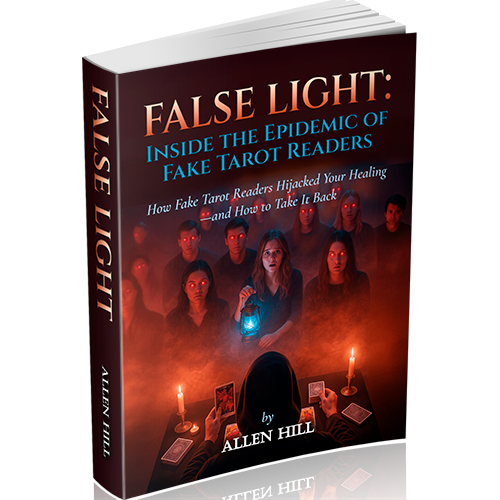
False Light: Inside the Epidemic of Fake Tarot Readers

If they keep giving you hope—but your life never changes—there’s a reason.

Channel Context & Integrity Gap

A snapshot of Freya Oracle Tarot’s audience scale, public reach, and any gap between their stated mission and the patterns observed in the audit.

Subscribers

6160

Channel Started

05/21/2025

Total Videos

80

Total Views

521K

Public Reach & Influence

As a recently established but rapidly growing channel, this reader is quickly building a measurable audience footprint and accumulating significant exposure.

Given the failing integrity grade and high-risk classification, this rapid growth accelerates the spread of disempowering and dependency-building patterns.

Even with a newer platform, the combination of increasing visibility and low-integrity practices creates a high consumer-risk presence that requires viewer caution.

Stated Intent vs Observed Reality (Integrity Gap Identified)

Stated Intent (From Channel Description):

“Focused on energy, emotions, and higher wisdom rather than prediction alone… meant to support healing, self-trust, and spiritual awakening… help you reconnect with your inner knowing.”

Alignment Analysis:
While the channel presents itself as a space for self-trust and higher wisdom, the audit data reveals a pattern that contradicts these claims.

The content relies heavily on guaranteed predictions, algorithmic fate-baiting, and the invention of highly specific, idealized outcomes (such as sudden wealth or the arrival of a divine lover).

This shifts the viewer’s locus of control externally.

Instead of reinforcing self-trust and inner knowing, the messaging conditions the viewer to wait passively for miraculous events and external validation.

The result is a clear Integrity Gap between the stated promise of empowerment and the observed delivery of dependency-driven, Window-based content.

ARCHETYPE SUMMARY & PSYCHOLOGICAL PROFILE

A breakdown of the dominant reader archetypes shaping Freya Oracle Tarot’s messaging style, dependency patterns, and viewer impact.

Archetype Summary

This reader relies heavily on formulaic fate-baiting, using sensationalized titles and parasocial hooks to artificially inflate engagement.

They consistently deliver idealized narratives by inventing highly specific details about guaranteed financial windfalls and divine lovers to keep the audience emotionally invested.

By framing the viewer as a passive recipient of inevitable upgrades, the content systematically replaces personal agency with external focus and emotional dependence.

This strategy conditions the audience to wait for guaranteed external rescues rather than taking actionable steps in their own lives.

Freya Oracle Tarot’s Most Dominant Reader Archetypes

These are the dominant reader archetypes this channel most strongly reflects based on the red flag tactics most heavily detected in the audit. They are not necessarily the only archetypes that apply, but they represent the clearest behavioral patterns shaping this reader’s content.

The Reader Archetype:

This archetype crosses into giving health or psychological advice by projecting medical meaning onto tarot cards or claiming to “intuitively” sense symptoms, diagnoses, or conditions that the cards themselves do not actually establish.

They may speak on symptoms, diagnoses, or what someone should do instead of seeking proper care.

The danger is serious harm. This can cause viewers to delay or replace real medical or mental health support.

How To Protect Yourself:

Ask yourself: Would I trust a qualified health professional to say this the same way?

Ask yourself: Is this YouTube tarot reader actually qualified to be giving this advice at all?

If not, stop watching immediately.

Unsubscribe and seek guidance from a licensed medical or mental health professional instead.

Dangerous unqualified health guidance disguised as spiritual insight

The Reader Archetype:

A Fantasy Supplier twists the reading to tell you what you want to hear.

Their messages revolve around reunions, secret feelings, regret, “they’re coming back”, and other narratives that keep emotional attachment alive.

The danger is that the lie starts replacing reality. You stay focused on the fantasy of what could happen instead of the pattern of what has consistently happened.

How To Protect Yourself:

Ask yourself: Is this helping me see the truth, or is it giving me another hit of hope?

If it’s hope, stop watching.

Unsubscribe, avoid the extended, and write down what has actually happened in the connection — not what the reading promises.

Idealized fantasy outcomes and emotional sedation

The Reader Archetype:

A Comfort Prophet wraps painful situations in soft spiritual language so they feel easier to tolerate.

You’ll hear things like “divine timing,” “this is part of your journey,” or “everything is unfolding as it should.”

The danger is that comfort replaces clarity. Instead of helping you face what’s happening, the message turns your pain into something meaningful enough to keep accepting it.

How To Protect Yourself:

Ask yourself: Did this help me see reality more clearly, or did it just make staying in this feel easier?

If it softened the pain without creating clarity, stop using this reader.

Unsubscribe, stop watching when you’re vulnerable, and bring your focus back to what actions and patterns are actually showing you.

Pain-softening messages that twist painful realities into spiritual meaning

The Reader Archetype:

An Algorithm Chaser builds readings around what gets attention.

Titles, themes, timestamps, and messages are shaped to trigger curiosity, urgency, hope, fear, false synchronicity, or a manufactured sense of divine chosenness.

The danger is that the content is engineered to keep you watching. The message serves engagement, not truth.

How To Protect Yourself:

Ask yourself: Did this deliver real clarity, or did it just hook my attention and make me feel personally chosen?

If it hooked you more than it helped you, stop clicking.

Unsubscribe, clear your watch history, and don’t reward manipulative content with your attention.

Manufactured synchronicity and engagement bait

MIRROR VS WINDOW ANALYSIS

An interpretation of how Freya Oracle Tarot directs attention, shapes agency, and either reinforces self-reflection or encourages external dependence.

Mirror Score Interpretation

This content functions almost entirely as a Window.

It focuses heavily on guaranteed external outcomes and miraculous events rather than the viewer’s own choices.

This encourages passive observation and waiting for external forces to resolve real-world challenges.

Over time, this strips away personal agency and fosters a deep dependency on the reader for emotional validation.

TECHNICAL FINDINGS & Red Flag TACTICs PROFILE

A structured breakdown of Freya Oracle Tarot’s red flag tactics, audit counts, and patterns of harm severity detected across the analyzed video sample.

Audit Scope & Density

Core sampling and frequency metrics from the analyzed video set.

Transcripts Analyzed

10

Avg Video Duration (minutes)

9

Violations Per Video

10.3

Violations Per 10 Minutes

12

Hierarchy of Harm Distribution

How the detected issues break down across major, moderate, and minor risk levels.

Major Red Flags

42

Moderate Red Flags

39

Minor Red Flags

22

Total Red Flags

103

The Harmful Red Flag Tactics Freya Oracle Tarot Uses

The specific content tactics and behavioral mechanisms detected in the audited sample

Major Red Flag Tactics

High-severity tactics that actively promote delusion, create dependency, and cause direct harm to viewer agency.

The audit found 26 instances of Guaranteed Predictions.

What Is It?

Telling the viewer exactly what will happen—including what another person will do and when—instead of reflecting the current energy and dynamics. It strips the viewer of their agency by presenting the future as a fixed script.

It strips away personal power and prevents viewers from making their own choices. This creates a harmful cycle of dependency where the viewer waits for a predicted future instead of actively creating their own.

How To Protect Yourself:

Understand that no one can see your future because it doesn’t exist as a fixed destination. You actively create your future via your own decisions, and the actions you take or don’t take.

You can take your power back by shifting your focus from asking “When will this happen?” to “How can I best navigate this energy?”

Seek out readers who explore the current dynamics and the different paths your own choices can create.

The audit found 2 instances of Twin Flame Ideology.

What Is It?

Promoting the made-up narrative of a “sacred twin soul” split in half by the Universe. It is an intentionally designed strategy built on heartbreak and hope addiction to keep people stuck in unhealthy dynamics.

It provides a spiritual justification for remaining in unhealthy or one-sided relationships. This narrative traps people in years of emotional stagnation by labeling dysfunction as a “sacred contract” or “divine mirror.”

How To Protect Yourself:

Understand that the Twin Flame ideology was invented in the 1970s by a literal doomsday cult leader named Elizabeth Claire Prophet, and does not have any roots in ancient wisdom or basis in reality.

To protect your emotional health, try stripping away spiritual labels like “Twin Flame” to evaluate a person’s actual behavior, and prioritize readers who focus on reciprocity, safety, and healthy boundaries over narratives that excuse pain as a “sacred contract.”

The audit found 9 instances of Inventing Details.

What Is It?

Dropping hyper-specific, unverifiable details that have no basis in tarot cards—like hair color, car type, or names—to manufacture a sense of psychic accuracy.

It is a performance designed to gain trust through cold reading or imagination.

It is a manipulation technique used to gain unearned trust. By performing psychic “parlor tricks”, the reader establishes a false authority that makes the viewer more susceptible to following potentially dangerous advice.

How To Protect Yourself:

Understand that a reader who invents specific details is no longer reading the cards. They are filling in blanks with imagination, assumption, projection, or performance.

You can protect yourself by asking, “Did the cards actually show this, or did the reader just add it?”

Seek out readers who clearly separate what the cards suggest from what they personally assume, and who don’t present made-up specifics as spiritual fact.

The audit found 4 instances of Scientific Authority Hijacking.

What Is It?

The use of scientific, biological, or medical language to frame spiritual or emotional experiences as measurable physical processes.

This tactic is used to create a false sense of legitimacy and authority.

It lowers the viewer’s natural skepticism by making unverifiable claims feel grounded in science, priming them to accept further guidance—including potentially harmful medical or psychological advice—without question.

How To Protect Yourself:

Understand that scientific language can be used to make unsupported spiritual claims sound more credible than they are. Words like “quantum,” “frequency,” “DNA,” or “nervous system” do not automatically make a claim true.

You can protect yourself by asking, “Is this actually evidence-based, or does it just sound scientific?”

Prioritize readers who stay honest about the difference between spiritual interpretation, personal belief, and verifiable scientific fact.

The audit found 1 instances of Pseudo-Medical Claims.

What Is It?

Using tarot cards, “intuitive feelings”, or “somatic hits” to diagnose clinical conditions (e.g., neurodivergence, pregnancy, inflammation).

This “diagnostic bypass” convinces the viewer that the reader has a “higher” insight than a trained medical professional, leading the viewer to prioritize a spiritual placebo over professional healthcare.

It creates a “High Liability” scenario where a viewer may delay or bypass necessary professional medical or psychological care in favor of a spiritual “diagnosis.” It exploits the vulnerability of people in pain by offering unverified “insights” that a reader is not legally or clinically qualified to provide.

How To Protect Yourself:

Understand that tarot readers, psychics, and spiritual creators are not qualified to diagnose, treat, or explain medical or mental health conditions through a reading.

In many places, this crosses legal lines and can violate platform policies — but more importantly, it puts your health and safety at risk.

You can protect yourself by rejecting any message that tells you what is happening in your body, mind, trauma, illness, medication, or healing process as if it were medical fact.

Seek support from licensed medical or mental health professionals, and avoid readers who blur the line between spiritual guidance and healthcare advice.

Moderate Red Flag Tactics

Corrosive patterns that cloud judgment, encourage passivity, and weaken self-trust.

The audit found 8 instances of Promoting Passivity.

What Is It?

Constantly telling the viewer to wait for “divine timing” or for a person to change instead of encouraging boundaries or decisions.

It encourages emotional passivity and keeps the viewer stuck in limbo while calling it “faith”.

It leaves people in a state of permanent waiting.

By teaching that all things are up to “divine timing,” it discourages the healthy boundaries and decisive actions needed to move forward in a real-world environment.

How To Protect Yourself:

Understand that some readings subtly train you to wait instead of act. You’ll hear messages that encourage patience, surrender, or “letting things unfold” without ever addressing your choices, boundaries, or next steps.

The danger is that you stop participating in your own life. Waiting replaces decision-making, and your situation stays the same while you hope it changes.

You can protect yourself by asking, Is this helping me act, or teaching me to wait?

Shift your focus back to what you can do. Seek out readers who emphasize your choices, your agency, and the impact of your actions.

The audit found 9 instances of Spirit as a Magic Concierge.

What Is It?

Treating “Spirit” or “The Universe” like characters in a divine rom-com who work overtime to deliver a perfect partner or apology.

It sells passive wish-fulfillment where no personal responsibility or action is required.

It promotes a passive, entitlement-based mindset that avoids real inner work.

It encourages people to view the Universe as a personal assistant, leading to intense disappointment and confusion when life doesn’t follow a “magic” script.

How To Protect Yourself:

Understand that some readers present “spirit,” “the universe,” or “guides” as if they are arranging outcomes, delivering people, or fixing situations for you.

The danger is that you start outsourcing responsibility. Instead of engaging with reality, you begin expecting something external to handle it for you.

You can protect yourself by asking, Am I being guided to act, or told something else will take care of this for me?

Bring the focus back to your role. Seek out readers who treat spiritual insight as awareness, not as a service that handles your life.

The audit found 2 instances of Excusing / Spiritualizing Dysfunction.

What Is It?

Twisting spiritual language to excuse toxic, avoidant, or immature behavior, such as claiming someone ghosted because the “connection is too intense”.

It reframes real pain as a “sacred contract” so the viewer stays in the dynamic longer.

It hides toxic behavior behind complex spiritual jargon. This prevents viewers from seeing the reality of a situation and keeps them stuck in cycles of neglect or poor treatment under the guise of “soul growth.”

How To Protect Yourself:

Understand that some readings reframe unhealthy behavior as something meaningful, karmic, or spiritually significant. Harmful patterns get labeled as lessons, contracts, or growth experiences.

The danger is that dysfunction becomes justified. Instead of recognizing a problem, you’re given a reason to tolerate it.

You can protect yourself by asking, Is this explaining the behavior, or excusing it?

If it’s being excused, step back. Prioritize clarity around actions, consistency, and boundaries over narratives that make unhealthy patterns easier to accept.

The audit found 17 instances of Meaningless Buzzwords.

What Is It?

Using impressive-sounding mystical phrases like “5D frequencies” or “vortex alignments” that lack any practical meaning or usable insight.

This “word salad” creates an illusion of depth while delivering nothing the viewer can actually use or grow from.

It creates an illusion of depth while providing no actionable insight.

This “spiritual word salad” confuses the viewer and makes it difficult for them to distinguish between real wisdom and empty performance.

How To Protect Yourself:

Understand that some readers rely on vague, undefined language like “alignment,” “energy shift,” “frequency,” or “activation” without explaining what those terms actually mean.

The danger is confusion. The message can sound deep or important without giving you anything clear, specific, or actionable.

You can protect yourself by asking, Can I clearly explain what this actually means in real terms?

If you can’t, don’t treat it as guidance. Seek out readers who communicate in clear, grounded language you can actually apply.

The audit found 3 instances of Toxic Positivity (Twisting Cards).

What Is It?

Reinterpreting every card in the deck—no matter how dark or heavy—as something positive to protect the viewer’s feelings.

It sanitizes the truth, such as calling the Tower “soul realignment” instead of a harsh wake-up call.

It invalidates the viewer’s real pain and challenges.

By forcing a “light only” perspective, it leaves people feeling guilty for their natural emotions and ill-equipped to handle difficult life transitions or grief.

How To Protect Yourself:

Understand that some readers force positive interpretations onto cards or messages that don’t support it. Challenging or cautionary meanings get flipped into something reassuring.

The danger is distortion. You’re no longer seeing the message as it is — you’re being given a version that feels better but hides important information.

You can protect yourself by asking, Is this interpretation honest, or is it being softened to feel better?

If everything is always positive, question it. Look for readers who can hold both supportive and difficult messages without twisting them.

Minor Red Flag Tactics

Lower-level manipulative tactics that exploit attention, rely on emotional hooking, reduce clarity, and signal lower-integrity guidance.

The audit found 1 instances of Dopamine-Hit Titles.

What Is It?

Using video titles as dopamine hooks that promise exactly what the viewer is desperate to hear (e.g., “They’re coming back”).

These titles target emotional cravings rather than providing actual energetic insight.

It targets vulnerable people with emotional “bait” purely to gain views and revenue.

By promising exactly what someone is desperate to hear, it prioritizes clicks and financial engagement over honest, grounded guidance.

How To Protect Yourself:

Understand that some readers use titles designed to create an emotional spike before you even click. These titles often promise shocking revelations, urgent messages, sudden returns, hidden feelings, or dramatic breakthroughs.

The danger is that your nervous system gets hooked before your discernment has a chance to speak. You start chasing the feeling of “maybe this one has the answer.”

You can protect yourself by asking, Did I click because I wanted clarity, or because the title triggered hope, fear, or curiosity?

If the title hooked you emotionally, pause before watching. Seek out readers whose titles reflect the actual reading instead of manipulating your attachment.

The audit found 12 instances of Parasocial Hooking (Algorithmic Fate-Baiting).

What Is It?

Using manipulative phrases like “this message found you just in time” or “you were meant to see this” to insert the reader into the viewer’s emotional reality.

It reframes ordinary algorithmic content delivery as divine intervention in order to deepen emotional attachment and perceived personal relevance.

It manufactures a false sense of intimacy and destiny-based connection in order to exploit emotional vulnerability.

This can increase viewer dependency, blur healthy boundaries, and condition the viewer to see random content delivery as spiritually significant guidance.

How To Protect Yourself:

Understand that some readers lie to you by framing the algorithm as fate. They imply that seeing the video means the universe, spirit, or divine timing specifically brought the message to you.

The danger is that a recommendation system starts feeling like spiritual confirmation. You may treat a video as personally meant for you simply because it appeared in your feed.

You can protect yourself by asking, Is this actually guidance, or did the platform simply recommend something I’m likely to click?

Break the spell by remembering the algorithm is not spirit. Clear your watch history, unsubscribe when needed, and stop treating suggested videos as signs.

The audit found 9 instances of Parasocial Hooking (Spiritualized Specialness Inflation).

What Is It?

Making the viewer feel unusually chosen, rare, gifted, high-level, or spiritually set apart in a way that strengthens emotional identification with the reader and the reading.

It flatters the viewer with a sense of exceptionalism to increase loyalty and psychological buy-in.

It can exploit loneliness, insecurity, unmet emotional needs, or identity confusion by offering an inflated sense of spiritual significance.

This creates attachment through ego-stroking rather than truth, and can make viewers more susceptible to manipulation, fantasy narratives, and ongoing dependency.

How To Protect Yourself:

Understand that some readers make viewers feel uniquely chosen, gifted, rare, or spiritually set apart. The message becomes less about clarity and more about making you feel special for watching.

The danger is that flattery can bypass discernment. When a reader makes you feel chosen, you may become less willing to question whether the message is actually true.

You can protect yourself by asking, Is this helping me see clearly, or just making me feel spiritually important?

Stay grounded. Don’t let flattery replace evidence, and avoid readers who use spiritual specialness to keep you emotionally attached to their content.

EMPOWERMENT METRICS & AGENCY PROFILE

A deeper look at how Freya Oracle Tarot’s content shapes agency, influences locus of control, and compares genuine self-reflection against prediction-driven engagement.

Mirror vs Window Profile

How Freya Oracle Tarot’s content distributes attention between self-reflection and externally focused prediction-based engagement.

Mirror Content Percentage

27%

Mirror Content
27%

Total percentage of this reader’s content that directs the viewer inward toward self-reflection, accountability, or grounded action.

Window Content Percentage

73%

Window Content
73%

Total percentage of this reader’s content that directs the viewer outward toward predictions, signs, external validation, or promised events.

Red Flag to Green Flag Balance

An at-a-glance comparison of disempowering versus empowering signals across the audited sample

Total Red Flags Found

103

Total Green Flags Found

7

Red-to-Green Flag Ratio

14.71 red flags per 1 green flag

% Transcripts with Red Flags

100%

% Transcripts with Green Flags

30%

Red Flags as % of All Detected Flags

94%

Green Flags as % of All Detected Flags

6%

Supporting Empowerment Metrics

Additional measures used to assess how Freya Oracle Tarot’s content distributes agency, reinforcement, and self-reflective guidance.

Transcripts Analyzed

10

# of Mirror Readings

0

# of Window Readings

10

Mirror Score

2.73 / 10

OVERALL INTEGRITY VERDICT

A concise closing judgment based on the full audit, summarizing Freya Oracle Tarot’s reliability, risk profile, and alignment with the Lighthouse Standard.

Final Assessment

This reader received an Integrity Score of 24.

This resulted in a grade of F and a classification of Problematic Reader.

They do not meet the Lighthouse Standard.

Their content presents a high-risk profile with systemic patterns that undermine viewer autonomy and overall reliability.

Share this Freya Oracle Tarot review:

Audit History

Date
Report Grade
Integrity Score
March 21, 2026
F
24

CURRENT STANDING

CRITICAL ALIGNMENT ISSUES WITH VIEWER AGENCY

Currently non-compliant with Lighthouse Standards.

Twin Flame Ideology detected (Zero Tolerance Clause).
